
Table of Contents
Getting out of bed shouldn’t hurt, but for some people, those first few steps in the morning are the hardest. The hip feels stiff, the leg doesn’t move comfortably, and climbing stairs becomes a problem. Sometimes, the pain settles after walking for a while. On other days, even sitting in a chair feels uncomfortable. Hip pain can start after a long day of work, a gym workout, or an old injury. It can also be caused by arthritis, tense muscles and lower back problems. Gentle exercises can help with some of these problems but the correct movement depends on where the pain is coming from.

What Are the Best Exercises for Hip Pain to Reduce Stiffness and Improve Hip Movement?

Before starting, spend a few minutes walking slowly around your room. Choose a comfortable surface and keep a chair nearby for support. Don’t force your leg into any position that causes sharp pain.

1. Hip Flexor Stretch

Have you noticed tightness near the front of your hip after sitting all day? The hip flexor stretch works on the muscles in that area. Kneel on your right knee, with your left foot in front. Keep your torso straight and push your hips forward gently. You should feel a light pull near the front of your right hip. Hold for 20 seconds, then change sides. Repeat twice. Place a cushion under your knee if necessary.

2. Glute Bridges

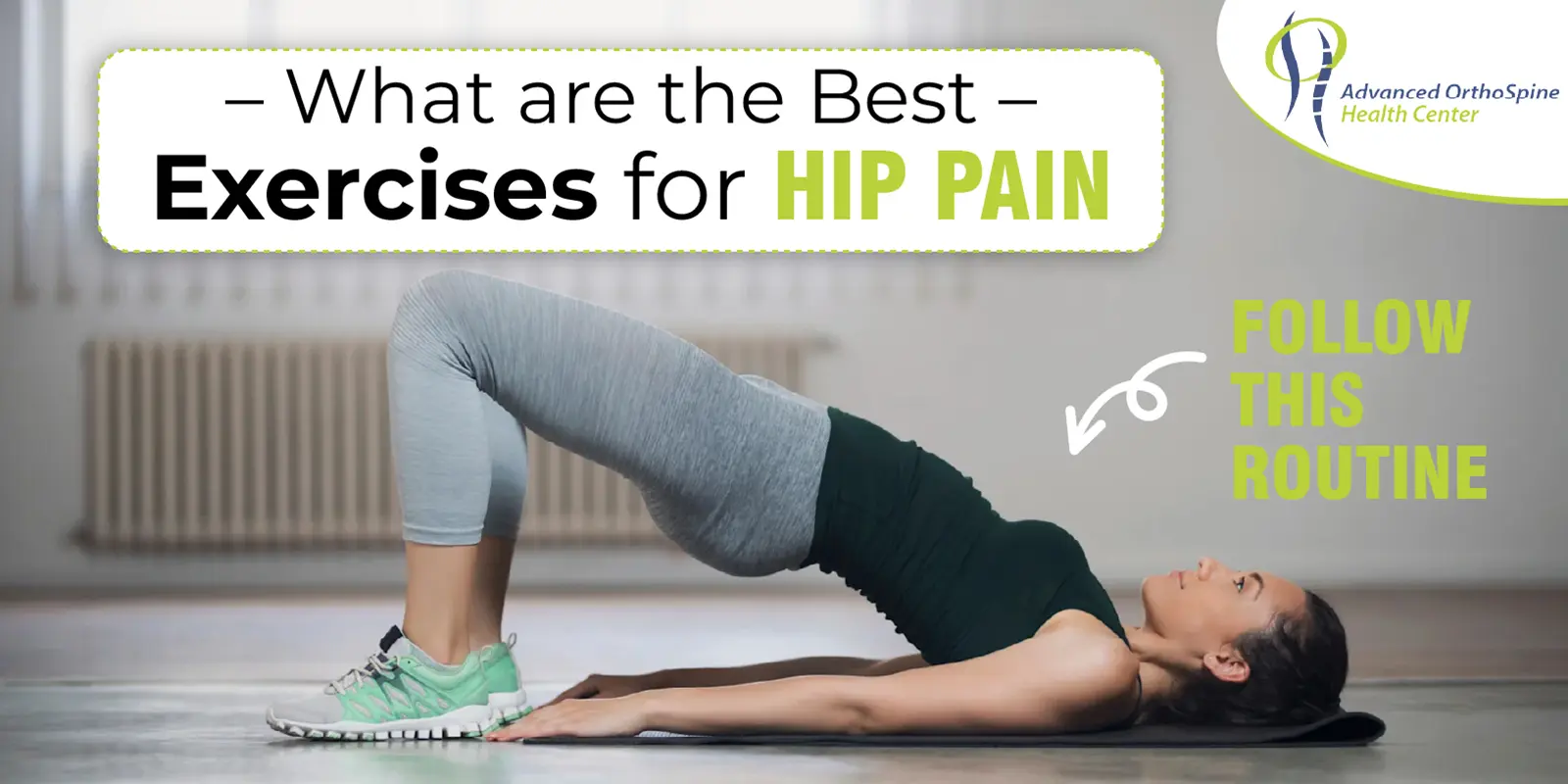
Your buttock muscles help you climb stairs, stand up, and walk without putting unnecessary strain on other muscles. Lie on your back with your knees bent and feet flat on the floor. Tighten your buttocks and slowly lift your hips. Hold for two seconds before lowering yourself. Start with eight repetitions. Keep your stomach gently tightened and avoid arching your back.

3. Butterfly Stretch

This stretch works on your inner thigh muscles. Sit on the floor and bring the soles of your feet together. Allow your knees to move outwards without pushing them down. Hold the position for 20 seconds while breathing normally. If you feel pinching deep inside your hip, stop. People with certain hip joint problems may find this position uncomfortable.

4. Side-Lying Leg Raises

The muscles on the outside of your hips help keep your pelvis steady when you walk. Lie on your side with your legs straight. Raise your upper leg slowly, keeping your toes pointing forwards. Lower it without dropping it suddenly. Try eight to ten repetitions on each side. Avoid lying directly on a painful outer hip.

5. Standing Hip Extensions

You can do this exercise beside your bed or kitchen counter. Hold a sturdy chair for balance. Stand straight and slowly move one leg backwards. Don’t bend your lower back or swing your leg. Return your foot to the floor and repeat ten times. Then change legs.

6. Walking on Flat Ground

Walking keeps your hip joint moving without requiring special equipment. Start with five minutes on level ground. Wear comfortable shoes and avoid taking unusually long steps. If your hip becomes more painful or you start limping, stop. You can try a shorter walk another day if symptoms settle.

Why Does Hip Pain Get Worse When You Sit or Walk?

Your hip is a ball-and-socket joint. It allows your leg to move forwards, backward and sidewards. Muscles and tendons around the joint help you walk and maintain balance. Just sitting long hours can make your hip muscles stiff. Weak buttock muscles can make climbing stairs harder. Muscle injuries and tears can cause pain after running or lifting something heavy. Sometimes the hip is not the real issue. Sciatica, herniated disks and low back pain can cause pain in the area around your buttocks and thighs. Ligament injuries may also affect movement after a fall or sporting accident.

What Should You Avoid When Your Hip Hurts?

Don’t assume that every stretch will help. Deep squats, running, jumping, and heavy lunges can aggravate certain hip conditions. People recovering from post surgery procedures need to follow their surgeon’s instructions. Some hip operations require temporary restrictions on bending or twisting. Avoid pushing through sharp pain. Soreness from using weak muscles is different from a sudden stabbing feeling inside the joint.

How Does Physiotherapy Help With Hip Pain?

A physiotherapist checks more than the painful area. They may watch you walk, test your hip movement, and examine your back when necessary. In rehabilitation by exercise, exercises of the buttocks, thighs and abdominal muscles are often included.Manual therapy can help with certain types of stiffness and posture correction can help with uncomfortable sitting or movement habits. For some conditions, a clinician may consider dry needling, shockwave therapy, laser therapy, or TECAR therapy. These treatments have different uses, and evidence of benefit varies. People returning to running or gym training may also need a gradual sports recovery programme.

When Should You See a Hip Pain Specialist?

If pain is recurring, disturbing your sleep or making it difficult to walk, see a healthcare professional. If you cannot stand or put any weight on your leg after a serious fall, call for urgent medical help. A hot, swollen hip accompanied by fever also needs urgent assessment. Hip Pain Services. Exercise Rehabilitation & Manual Therapy. Advanced Orthospine Health Center provides hip pain services for people with chronic hip pain. A clinical examination can help determine which exercises are appropriate and whether further investigation is needed.

Frequently Asked Questions

1. Which exercise is best for hip pain?

Glute bridges, gentle walking, and hip stretches may help, depending on what causes your pain.

2. Can walking make hip pain worse?

Yes. Long walks or uneven ground may aggravate certain hip problems. Reduce walking if symptoms increase.

3. Is hip pain connected to sciatica?

Sometimes. Irritated nerves in your lower back can cause pain around your buttocks, hips, and legs.

4. How many times should I do hip exercises?

Start with a few comfortable repetitions. Your physiotherapist can advise how often to exercise based on your condition.

5. Can physiotherapy help with chronic hip pain?

Physiotherapy can help many people manage ongoing hip pain through strengthening exercises, movement guidance, and treatment suited to their diagnosis.
SEO by STE
Call us