
Table of Contents
Sciatica pain can slowly interfere with daily life. What begins as mild discomfort in the lower back may spread to the hip, buttock, or leg, making simple activities like sitting, walking, or sleeping uncomfortable. This nerve-related condition affects mobility, posture, and overall physical comfort.
What Is Sciatica Pain?
Sciatica occurs when the sciatic nerve becomes irritated or compressed. This nerve originates in the lower spine and travels through the hips and down each leg. When pressure builds around it, the pain often follows the nerve’s pathway instead of staying in one place.
People may describe the sensation as sharp, burning, or radiating. In some cases, the discomfort may come and go, while in others it may persist and affect normal movement.
Common Symptoms of Sciatica
Sciatica symptoms vary from person to person, but some patterns are frequently reported.
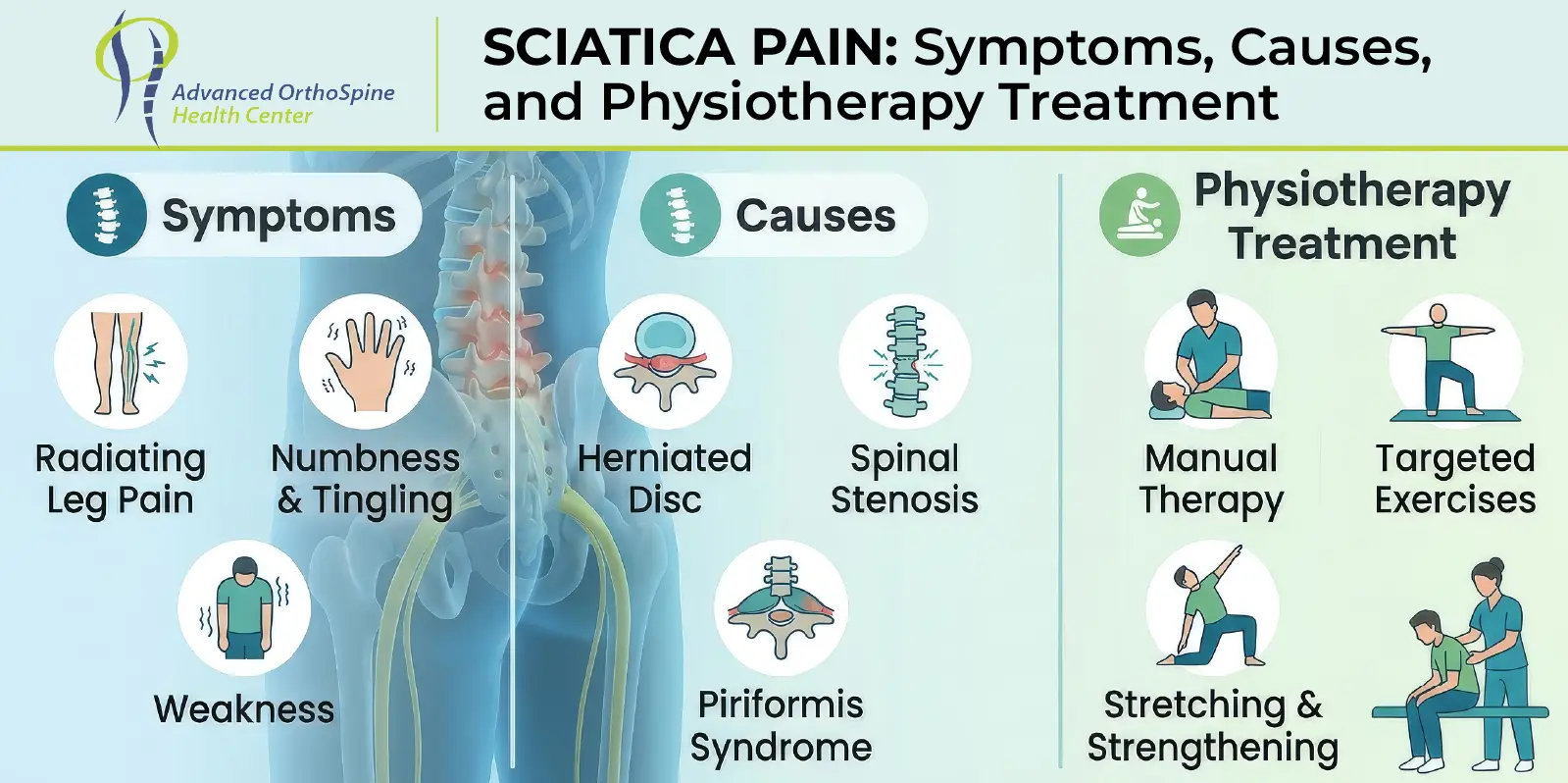
Typical signs include:
- Pain that travels from the lower back to the leg
- Tingling or numbness in the thigh, calf, or foot
- Muscle weakness in the affected leg
- Difficulty standing, walking, or sitting for long periods
- Increased discomfort during bending, coughing, or sneezing
Recognising these symptoms early can help prevent long-term nerve irritation and mobility issues.
What Causes Sciatica?
Sciatica usually develops when physical pressure or inflammation affects the nerve. Understanding the cause helps guide the right treatment approach.
Common causes include:
- Herniated or slipped disc compressing spinal nerves
- Spinal stenosis causing narrowing of the spinal canal
- Piriformis muscle tightness irritating the nerve pathway
- Degenerative disc changes related to ageing
- Poor posture and prolonged sitting habits
- Sudden lifting injuries or repetitive strain
Addressing the root cause is essential for lasting relief rather than short-term symptom control.
How Physiotherapy Helps in Sciatica Treatment
Physiotherapy remains one of the most effective non-surgical approaches for managing sciatica pain. Instead of relying solely on medication, treatment focuses on improving nerve function, muscle strength, and spinal stability.
Physiotherapy treatment may include:
- Targeted exercises to strengthen core and back muscles
- Stretching techniques to improve hip and hamstring flexibility
- Manual therapy to release muscle tension and joint stiffness
- Posture correction training for daily movement habits
- Electrotherapy or supportive modalities for pain relief
Consistent therapy helps reduce pain episodes, restore mobility, and support long-term spinal health.
When Should You Seek Professional Care?
Mild nerve irritation may improve with rest and basic care. However, persistent or worsening symptoms should not be ignored. Early physiotherapy intervention can prevent chronic nerve damage and prolonged functional limitations.
You should consider professional evaluation if:
- Pain lasts more than a few weeks
- Discomfort spreads down the leg
- Numbness or weakness affects daily activity
- Movement becomes increasingly restricted
Timely treatment supports faster recovery and reduces the chances of recurrence.
FAQs
Can sciatica be treated with physiotherapy?
Yes. Physiotherapy reduces nerve pressure, strengthens muscles, and improves movement, making it highly effective for sciatica management.
What is the best treatment for sciatica pain?
Treatment depends on the cause. In most cases, physiotherapy combined with posture correction and lifestyle changes provides lasting relief.
Is sciatica completely curable?
Many patients recover fully with proper care. Long-term outcomes depend on early treatment and consistency in therapy.
Will sciatica go away without physiotherapy?
Mild cases may improve naturally, but untreated sciatica often returns or worsens. Physiotherapy lowers recurrence risk and supports faster healing.